Buying a quarter cow sounds like something ranchers do, not regular people with regular freezers in regular suburban garages. But it’s more common than you think and it’s probably the smartest meat purchase you’ll make all year.
Here’s the math nobody tells you. A quarter cow gives you roughly 100 to 120 pounds of finished, wrapped, labeled beef. You get steaks, roasts, ground beef, stew meat, brisket, short ribs. All of it cut exactly how you want it. You pay less per pound than you would picking up a couple steaks and a pound of ground beef every week at the store over the same period. And the quality is better because you’re buying from a butcher who sourced the animal from a farm they trust.
What You Actually Get in a Quarter Cow
A quarter beef isn’t four identical boxes. It’s a share of one animal, divided into four roughly equal portions. You get cuts from both the front quarter and the hind quarter so the distribution is fair. Nobody gets stuck with all ground beef and no steaks.
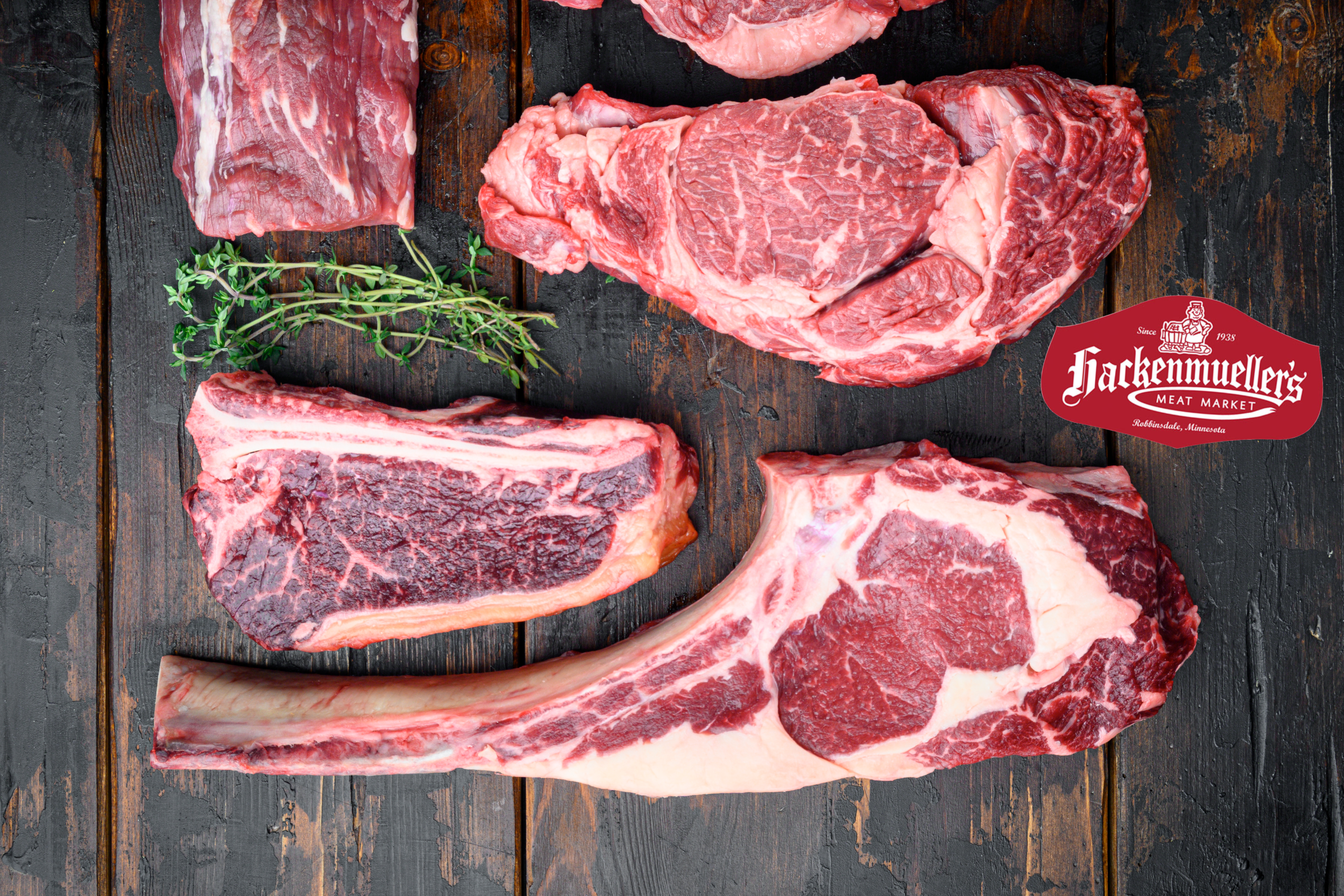
A typical quarter breaks down roughly like this: 35 to 45 pounds of ground beef, 4 to 6 steaks (ribeyes, T-bones, and sirloins depending on how we cut), a couple chuck roasts, an arm roast or rump roast, stew meat, brisket if you want it, short ribs, and soup bones if you ask for them. You get a say in all of it.
Want your steaks cut an inch and a half thick instead of the standard inch? Done. Prefer more ground beef and fewer roasts because your family goes through burgers faster than pot roast? We’ll adjust. Hate liver and don’t want it anywhere near your box? It won’t go in. These are conversations we have every day with customers picking up their quarter beef.
The Cut Sheet: Your Most Important Decision
When you order a quarter cow, you fill out a cut sheet. This is the form where you tell us exactly how you want your beef portioned. It might seem intimidating if you’ve never done it before but we walk every customer through it.
The big decisions: steak thickness (three-quarter inch, one inch, inch and a half), roast size (two to three pounds is standard for most families, larger if you host holidays), ground beef package size (one-pound packages are most common but we can do one-and-a-half or two-pound packs), and how many steaks per package (two is standard, singles are fine, four-packs work for larger families).
Some people want every cut they can get. Others keep it simple: steaks, roasts, and ground beef, skip the rest. Both approaches are valid. We’ll help you decide what makes sense based on how you cook and how many people you’re feeding.
How Much Freezer Space You Actually Need
You don’t need a walk-in freezer. A standard 7 cubic foot chest freezer handles a quarter cow with room to spare. That’s the size of a small dorm fridge tipped on its back. Most people put it in the garage or basement and forget it’s there until they need to restock.
If you already have a freezer, come in and we’ll talk about what fits. If you don’t, you can pick one up for about what you’d spend on a couple of nice dinners out. It pays for itself in the first quarter cow because of what you save on meat over the next six to eight months.
A couple tips nobody tells you about freezer storage: organize your beef by cut so you’re not digging through a frozen avalanche every time you want a steak. Put the steaks on top, roasts in the middle, ground beef on the bottom. Label the outside of the freezer with a rough inventory so you know what’s left without opening the lid. And keep a freezer thermometer inside — chest freezers should stay at zero degrees or below. If the power goes out, a full freezer stays cold longer than an empty one.
The Cost Question
We don’t publish exact prices here because the beef market moves around, especially this year. What we can tell you is the principle: when you buy a quarter cow, you’re paying one price per pound for everything. Ribeyes, ground beef, roasts — same rate. The steaks you’d normally pay premium prices for at the grocery store come at the bulk rate.
Think about that. A grocery store ribeye might cost two or three times what the ground beef costs. In a quarter cow, they’re the same price per pound. You’re getting the expensive cuts for the same rate as the economical ones. Over the course of six months of eating from your freezer, those savings add up.
How It Works at Hackenmueller’s
Come in and talk to us. We’ll walk you through what’s available, when the next processing slot is, and what you need to decide before the animal goes to the processor. You fill out a cut sheet. We handle the rest.
The beef is sourced from Minnesota and regional farms. We dry-age it for flavor development before cutting. It’s processed at a USDA-inspected facility and cut right here in the shop by people whose names you know. When it’s ready, we call you. You pick up boxes of labeled, frozen, vacuum-sealed beef and stack them in your freezer.
That’s the whole process. No subscription. No mystery box delivered by a startup with a clever logo. Just beef, cut your way, from an animal raised by someone we know, at a price that makes sense when you do the math over a full year.
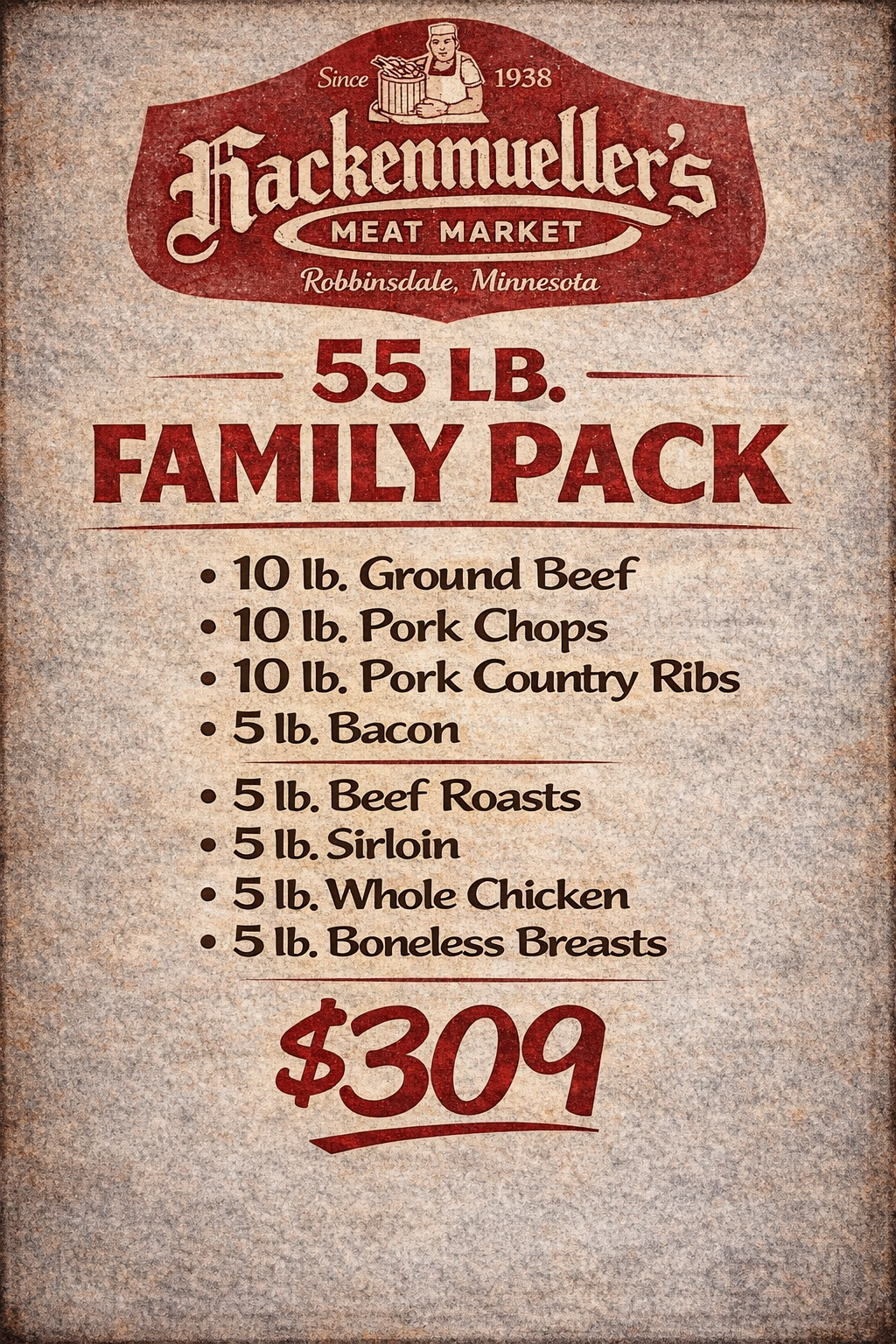
Stop by and ask about quarter beef availability. We’ll give you the straight answer with no pressure. Contact us or check out our meat bundles guide if you’re not ready for a full quarter.